
Why the Brain Craves Novelty
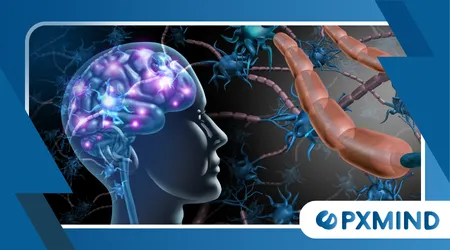
Understanding Why the Brain Craves Novelty is the key to unlocking how we learn, stay motivated, and maintain mental sharpness throughout our entire lives.
Anúncios
Our biology is hardwired to reward exploration, transforming every new experience into a surge of neurological growth.
By mastering this primal drive, you can optimize your cognitive performance and foster a more creative, resilient mind.
Summary
- Neurobiology: The SN/VTA complex as the brain’s “novelty engine.”
- Dopamine’s Role: Moving beyond pleasure to the science of anticipation.
- Cognitive Growth: How new experiences fuel neuroplasticity and BDNF.
- Practical Habits: Balancing the drive for “new” with deep-focus work.
What is the Neurological Basis for Why the Brain Craves Novelty?
Our obsession with the unknown isn’t just a quirky personality trait; it is a fundamental survival mechanism etched into our midbrain. Why the Brain Craves Novelty starts in the Substantia Nigra/Ventral Tegmental Area (SN/VTA).
These deep-seated regions act as the primary factory for dopamine. When we encounter something unfamiliar, the SN/VTA fires up, sending chemical signals straight to the hippocampus to start recording the experience.
This biological bridge connects the “new” with the “reward.” The brain essentially pays us in dopamine for exploring our environment, ensuring we stay curious enough to find new resources or avoid potential dangers.
How Does the Dopamine Loop Influence Our Search for Newness?
Dopamine is frequently mislabeled as a “pleasure molecule,” but in neuroscience, we recognize it more as a molecule of drive and expectation. It powers the hunt, not just the capture.
Whenever you experience a surprise, your brain calculates a “prediction error.” This unexpected shift triggers a surge of dopamine, telling your synapses that this specific moment is worth prioritizing over routine data.
Modern digital interfaces, from social media to endless news cycles, are specifically designed to hijack this system. Each refresh provides a micro-hit of novelty, keeping your brain in a state of perpetual, high-alert seeking.
Why is Novelty Essential for Neuroplasticity and Cognitive Reserve?
Neuroplasticity—the brain’s ability to rewire itself—requires more than just repetition; it requires a challenge. Why the Brain Craves Novelty is tied to our need for building a “cognitive reserve” against aging.
Monotony is the enemy of brain health. When we repeat the same patterns daily, the brain enters a “power-saving” mode, eventually pruning away underused neural connections to save metabolic energy for other tasks.
Engaging with new stimuli triggers the release of Brain-Derived Neurotrophic Factor (BDNF). This protein acts as a high-grade fertilizer for neurons, supporting the growth of fresh synapses and protecting existing brain cells.
Data Comparison: Routine vs. Novel Stimuli (2026 Research)
| Metric | Routine Tasks | Novel Stimuli | Impact on Brain |
| Dopamine Release | Baseline | 150-200% Increase | Enhanced focus and drive |
| Memory Encoding | Passive | High-Priority | Superior long-term storage |
| Neural Activation | Localized | Global/Widespread | Better cross-brain communication |
| BDNF Production | Minimal | Significant Elevation | Encourages neurogenesis |
Which Evolutionary Advantages Drive Our Need for the Unfamiliar?
Evolutionary biology suggests that our ancestors survived because they were “neophiliacs.” Those who sought out new territories or novel food sources were far better equipped to survive sudden environmental shifts.
This drive to map the unknown allowed early humans to predict threats before they happened. Why the Brain Craves Novelty is a legacy of this ancestral program that rewarded risk-taking with vital survival data.
You can dive deeper into how these genetic traits evolved in this comprehensive study by Nature Neuroscience, which explores the link between exploration and genetic fitness.
How Can We Use Novelty to Improve Learning and Memory?
The “Novelty Effect” proves that we remember information better when it is paired with something strange or new. This is why you likely remember a vacation better than a year of Tuesdays.
To leverage this, try “environmental shuffling.” Simply moving your laptop to a different room or a park bench can trigger the SN/VTA, making your brain more “sticky” for the information you’re consuming.
++ The Science of Intuition: Fast Thinking Explained
Small, intentional disruptions—like brushing your teeth with your non-dominant hand—force the prefrontal cortex to wake up. These tiny challenges keep your executive functions sharp and prevent the mental “fog” of autopilot.
When Does the Craving for Novelty Become Counterproductive? Why the Brain Craves Novelty
While seeking the new is healthy, it can easily devolve into “Shiny Object Syndrome.” This happens when the search for a dopamine hit replaces the discipline needed for deep, meaningful work.
Switching between tasks or apps every few minutes fragments our attention. This prevents us from reaching “flow,” the state where the brain is most productive and where true mastery of a subject actually occurs.
Read more: The Role of Myelin in Learning and Speed
The goal is to use novelty as a spark, not a constant fire. We must balance our biological drive for discovery with the cognitive endurance required to see a complex project through to completion.
What Are the Best Ways to Feed Your Brain Healthy Novelty?
Feeding your brain doesn’t have to mean skydiving or moving across the globe. Consistent “micro-novelties” are often more effective for maintaining long-term cognitive flexibility and psychological resilience.
Try picking up a book on a topic you know nothing about or experimenting with a recipe using an ingredient you can’t name. These small acts stimulate diverse sensory and cognitive pathways.
++ Why We Forget Names Quickly — A Brain-Based Reason
Social novelty is equally powerful. Talking to someone outside your usual circle forces your brain to recalibrate its social models, challenging your biases and keeping your emotional intelligence sharp and adaptable.

The Explorer Inside Your Head
Understanding Why the Brain Craves Novelty allows you to stop fighting your distractions and start directing your curiosity. By feeding your brain the right kind of “new,” you build a more resilient mind.
We are biologically programmed to be explorers, not just processors. Embracing this inherent human trait is the most effective way to stay creative, motivated, and mentally young in an ever-changing world.
For more technical insights into brain mapping and the latest neurological discoveries, visit the Society for Neuroscience.
FAQ:
Does novelty seeking change as we age?
While the dopamine system becomes slightly less reactive as we age, the cognitive benefits of novelty actually increase, making new experiences vital for preventing dementia and memory loss.
Can social media “break” my novelty response?
Over-exposure to rapid digital novelty can desensitize your reward system. It’s important to take “analog breaks” to recalibrate your brain to appreciate slower, more meaningful forms of discovery.
Is curiosity the same thing as novelty seeking?
They are closely related. Curiosity is the psychological desire to close an “information gap,” while novelty seeking is the broader biological drive to experience something previously unknown.
How does novelty affect stress levels?
Controlled novelty (like a hobby) reduces stress by providing “eustress” (good stress). However, too much unexpected change can trigger the amygdala, leading to anxiety and a feeling of being overwhelmed.
What is the best way to start a “novelty habit”?
Start small. Change one minor part of your daily routine—like your morning drink or your walking route—to signal to your brain that it’s time to pay attention again.
++ Novelty Keeps Your Brain Healthy
++ Dopamine Modulates Novelty Seeking Behavior During Decision Making