
How Emotional Contagion Effects Shape Your Daily Mood

Emotional Contagion Effects dictate that human emotions operate precisely like transmissible echoes, silently shaping your daily mood without your conscious permission or immediate awareness.
Anúncios
Have you ever walked into a room feeling completely energized, only to leave dragging a heavy anchor of unexplained exhaustion?
You likely caught a psychological pathogen from a stressed coworker or a frantic family member.
Understanding these invisible currents requires looking past standard mindfulness advice.
This comprehensive analysis breaks down the evolutionary neuroscience, real-world data, and behavioral strategies needed to master your personal climate.
Índice
- How Do Emotional Contagion Effects Shape Human Subconscious States?
- What Are the Underlying Neurological Drivers Behind Shared Mood Dynamics?
- Why Is Workplace Group Morale Vulnerable to Negative Affect Overspill?
- How to Build an Effective Shield Against Collective Psychological Stress
- Perguntas frequentes
- Conclusão
How Do Emotional Contagion Effects Shape Human Subconscious States?
Every social interaction triggers an unspoken negotiation where individuals synchronize their facial expressions, vocal frequencies, postures, and internal nervous system states.
This phenomenon underpins the primary emotional contagion effects that govern how humans interact in close quarters.
Subconscious mimicry happens within milliseconds, rendering your behavioral framework vulnerable to the psychological climate of your immediate environment.
When your brain processes a peer’s furrowed brow or a tense tone, it replicates that specific somatic experience internally.
This biological mirroring ensures that you do not merely observe another person’s anxiety; your nervous system actively samples it.
Over time, constant exposure to external negativity alters your baseline cortisol levels, slowly warping your cognitive outlook and overall well-being.
What Are the Underlying Neurological Drivers Behind Shared Mood Dynamics?
The primary architecture responsible for these shifts resides within the human mirror neuron system. These specialized brain cells fire both when you perform an action and when you watch someone else execute that same movement.
Neuroscientists note that this system bridges the gap between observation and internal experience, transforming visual social cues into identical physiological responses.
Furthermore, the amygdala rapidly processes these social signals before your conscious prefrontal cortex can intervene.
++ Como os ciclos de evitação emocional afetam o bem-estar mental
This rapid evolutionary survival mechanism allowed early human tribes to share panic instantly when facing apex predators.
In the modern landscape, however, this survival loop causes urban professionals to absorb ambient corporate dread or domestic tension without logical cause.
Why Is Workplace Group Morale Vulnerable to Negative Affect Overspill?
Modern corporate offices and digital communication platforms serve as perfect incubators for destructive emotional contagion effects.
Gallup’s benchmark global emotional metrics indicate that systemic workplace stress remains near historic highs.
Leia mais: Por que o impacto emocional negativo afeta sua saúde mental no trabalho
This persistent collective pressure transforms common shared areas into spaces where psychological exhaustion passes effortlessly from supervisors to frontline personnel.
| Metric Type | Daily Stress Rate | Daily Anger Rate | Daily Sadness Rate |
| Global Population Mean | 37% | 22% | 26% |
| High-Pressure Corporate Environments | 54% | 31% | 39% |
| Optimized Workplace Ecosystems | 19% | 11% | 14% |
Organizations with elevated negative metrics suffer rapid declines in collective problem-solving capacity and collaborative output.
Research confirms that anger absorbed from peers directly causes cognitive errors, which subsequently sparks physical safety accidents and operational errors.
Conversely, groups that consciously spread positive expressions experience superior resilience, proving that positive psychological states act as critical structural assets.
Learn more about national workplace metrics and intervention design at the National Institutes of Health (.gov).
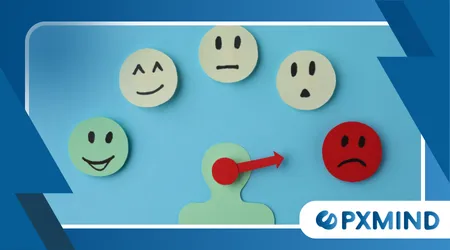
How to Build an Effective Shield Against Collective Psychological Stress
Countering pervasive emotional contagion effects demands structural behavioral changes rather than simple positive thinking.
First, establish clear somatic awareness by checking your physical tension when entering highly charged environments.
Identifying whether a sudden spike in physical anxiety belongs to you or a nearby peer stops the mimicry process.
Second, deploy targeted tactical breathing patterns to intentionally regulate your autonomic nervous system when encountering expressive panic.
This physiological override prevents your heart rate from matching the accelerated rhythms of distressed individuals around you.
Intentionally keeping your posture open and your voice calm breaks the bidirectional loop of shared negative panic.
Third, construct distinct mental boundaries by utilizing objective cognitive reappraisal during tense interpersonal exchanges.
Remind yourself explicitly that a supervisor’s frantic disposition reflects their internal coping capacity, not your personal performance. This intellectual distance insulates your emotional core while preserving your capacity for genuine empathy.
++ A ciência por trás da reconsolidação e da recordação da memória.
Finally, audit your daily digital intake to minimize algorithmic exposure to simulated social outrage. Digital spaces leverage emotional contagion effects by intentionally amplifying negative content to increase platform session times.
Limiting high-conflict feeds ensures your nervous system retains the energetic reserves required to support healthy offline relationships.

Perguntas frequentes
Can emotional contagion effects occur through digital text and video calls?
Yes, modern behavioral studies demonstrate that electronic communications transfer distinct moods quite efficiently.
Textual choice, punctuation density, response latency, and video facial micro-expressions all trigger identical mirror neuron responses in remote workers.
What is the difference between empathy and emotional contagion?
Empathy involves an intellectual, conscious understanding of another person’s suffering while maintaining a clear personal boundary.
Contagion is an involuntary, raw somatic absorption of another’s mood that leaves you feeling identical stress.
Are certain personality types more susceptible to catching moods?
Highly sensitive people and individuals who score high in trait agreeableness demonstrate elevated vulnerability to ambient environmental moods.
Their neural architecture naturally dedicates more tracking resources to reading and decoding subtle social signals.
How can leaders leverage these effects to boost team performance?
Leaders can project intentional calm, authentic optimism, and psychological safety through clear vocal tones and deliberate body language.
Because authority figures possess outsized social presence, their positive expressions naturally uplift the entire collective network.
Beyond the Invisible Current
Navigating the hidden currents of emotional contagion effects is essential for protecting your daily mood and mental longevity.
Recognizing that shared human feelings operate like invisible transmissible feedback loops allows you to transform from a passive sponge into an intentional anchor.
Implementing somatic boundaries ensures you remain supportive of others without sacrificing your personal psychological health.
Take control of your mental environment today by auditing your closest social circles and professional workspaces.
Choose to project steady, grounded energy into your encounters, effectively shifting the emotional landscape around you.
For further evidence-based psychological tools and wellness resources, explore the foundational guidelines provided by the American Psychological Association (.org).
++ Emotional Contagion: Why Others’ Moods Affect You
++ Emotional Contagion: How Your Mood Shapes the Atmosphere Around You