
Overlearning Myth: When Repetition Stops Being Effective

The Overlearning Myth suggests that endless repetition guarantees mastery, but modern cognitive science in 2026 reveals a much more nuanced reality regarding how our brains actually store data.
Anúncios
Summary of Key Insights
- Identifying the physiological wall where study sessions stop yielding results.
- The critical distinction between functional skill reinforcement and cognitive exhaustion.
- Implementing evidence-based alternatives like interleaved practice and retrieval.
- Recognizing the bio-markers that signal your brain has stopped encoding new data.
What is the Overlearning Myth in Modern Neuroscience?
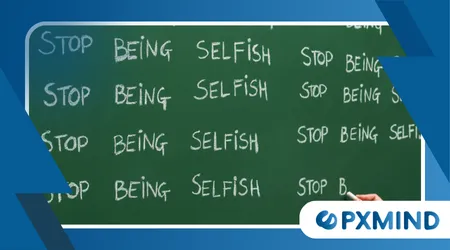
Many students operate under the stubborn assumption that practicing a skill past 100% accuracy cements it forever. Yet, this central pillar of the Overlearning Myth often acts as a thief of time.
Initial reinforcement is essential for stabilizing neural pathways, but excessive repetition without strategic pauses triggers a biological plateau.
At this point, the brain effectively “mutes” incoming stimuli, no longer prioritizing it for long-term storage.
Current 2025 neuroimaging indicates that synaptic plasticity demands cycles of rest to consolidate memory.
The relentless “grind” mentality is not just exhausting; it is statistically less effective for mastering high-level professional skills or complex theory.
Instead of building a deep mental reserve, mindless repetition often fosters a superficial “fluency.”
You might perform perfectly today, only to find the underlying mechanics have evaporated by next week because the brain never truly integrated them.
Why Does Excessive Repetition Fail to Improve Long-Term Retention?
The primary reason the Overlearning Myth persists is the seductive illusion of competence. We feel like we are learning because a task becomes easier, but ease is frequently the enemy of deep, structural encoding.
When you drill a single fact dozens of times in one sitting, the prefrontal cortex reduces its engagement. It predicts the outcome with zero effort, essentially putting your cognitive development on a low-power “standby” mode.
This neural downregulation means you are coasting on short-term working memory. You aren’t forcing the hippocampus to build the durable connections required for high-stakes recall or the ability to apply knowledge under pressure.
True learning thrives on “desirable difficulties.” Making the process slightly more frustrating actually improves long-term results, a concept championed by researchers at UCLA’s Bjork Learning & Forgetting Lab who study how forgetting fosters better remembering.
How Does the “Law of Diminishing Returns” Affect Your Brain?
In any practice session, there is a point where the metabolic cost of continuing far outweighs the microscopic gains in synaptic strength. This is where the Overlearning Myth becomes an expensive habit.
Recent data shows that after roughly 25% extra practice beyond initial mastery, brain oxygen consumption in learning centers drops. Meanwhile, stress markers like cortisol begin to climb, which is a recipe for stagnation.
++ Encoding Variability: Why Studying the Same Topic in Different Ways Works
High cortisol levels actively sabotage the formation of new memories. Ironically, those extra two hours spent “pushing through” might be actively degrading the quality of the information you managed to acquire earlier that morning.
| Practice Method | Immediate Recall | Retention (4 Weeks) | Brain Fatigue Level |
| Massed Practice | 95% | 32% | Very High |
| Traditional Overlearning | 98% | 45% | High |
| Spaced Repetition | 88% | 78% | Low |
| Interleaved Learning | 82% | 84% | Moderate |
Which Strategies Actually Replace the Overlearning Myth?
To escape the Overlearning Myth, elite learners are moving toward “Interleaving.” This involves mixing different subjects or skills in a single session, forcing the brain to constantly reset and re-evaluate the material at hand.
By making your mind distinguish between different types of problems, you create a “discriminative contrast.”
This mental friction strengthens the retrieval cues necessary for solving unpredictable, real-world challenges where the “answer” isn’t always obvious.
Another vital tool is “Active Recall,” where you prioritize testing yourself over passive re-reading. This ensures you are building the specific neural pathways needed for finding information rather than just recognizing words on a page.
Read more: Contextual Learning: Why Studying in Different Environments Improves Retention
These methods ensure every minute spent studying translates into neurological change.
It prevents the stagnation inherent in traditional, repetitive drills that still dominate outdated educational systems and uninspired corporate training modules.
When Should You Stop Practicing a Specific Topic?
The most effective time to walk away is immediately after achieving “fluency without assistance.” At this peak, you should shift focus to a different task to allow the initial memory trace to begin consolidation.
Continuing past this point usually feeds into the Overlearning Myth. It provides a comforting sense of security while offering almost zero benefit to your permanent knowledge base or your future professional performance.
Monitor your “perceived exertion.” When a task becomes so rhythmic that your mind starts to wander to your dinner plans, you have hit the ceiling of what that specific session can offer.
++ How the Telescoping Effect Distorts Your Sense of Time
Strategic quitting is not a sign of weakness; it’s a sophisticated mindhack. It respects the biological limits of your brain’s ability to synthesize data, ensuring your cognitive energy is spent on growth, not repetition.

Moving Beyond the Repetition Trap
Dismantling the Overlearning Myth allows you to reclaim hundreds of hours every year. It shifts the focus from the quantity of hours logged to the quality of how you strategically engage with challenging material.
Efficiency in 2026 is defined by neurological precision. Prioritize active engagement and diverse stimuli over the blunt force of mind-numbing drills. The goal is to build a mind that is resilient, adaptable, and genuinely sharp.
By embracing modern cognitive science, you transition from a “hard worker” to a “sophisticated learner.” You ensure your expertise remains durable and ready for use when the stakes are at their highest.
For deeper technical insights into cognitive optimization and the latest peer-reviewed protocols, explore the Nature Portfolio on Neuroscience to keep your learning strategy ahead of the curve.
FAQ: Frequently Asked Questions
Is overlearning ever useful?
It has a place in “automatic” tasks where performance must be flawless under life-threatening stress—like emergency surgery or aviation—but it is remarkably inefficient for conceptual, creative, or academic knowledge.
How much extra practice is too much?
Generally, if you spend more than 50% of the time it took to master the task on “extra” drills, you’ve likely crossed into the zone of diminishing returns where learning essentially stops.
What is the most durable way to maintain a skill?
The gold standard remains spaced repetition. By forcing the brain to work harder to retrieve information at increasing intervals, you build much more resilient memories than any single, long-duration session could provide.
Can overlearning cause mental burnout?
Yes. The cognitive boredom of excessive repetition increases mental friction. This drains your motivation and kills the “joy of discovery” that is the primary fuel for high-level, lifelong learning and intellectual growth.