
How Visualization Affects the Brain Like Real Practice
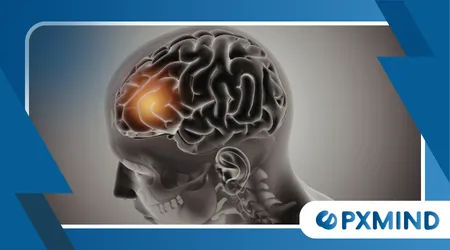
Visualization Affects the Brain Like Real Practice in ways that still surprise many people. A movement imagined with clarity can light up neural circuits almost identical to those activated during the real action.
Anúncios
That idea once sounded like motivational rhetoric. Today, neuroscience treats it as a measurable phenomenon. Mental rehearsal—when done deliberately—can shape the brain’s learning pathways before the body ever moves.
Athletes, surgeons, musicians, and pilots rely on this quiet form of training. The technique does not replace physical repetition, yet it primes the brain to perform with greater precision once practice begins.
Something subtle happens during vivid mental imagery: the brain rehearses reality. Not perfectly, not completely—but often enough to strengthen the neural maps behind skill, timing, and decision-making.
Summary
- What visualization means in neuroscience
- How mental rehearsal activates real brain circuits
- Why professionals rely on visualization training
- When mental imagery improves learning and recovery
- Which brain regions participate in internal simulation
- Practical ways to apply visualization responsibly
What Is Visualization in Neuroscience?
Visualization, in scientific terms, refers to the deliberate construction of mental experiences without direct sensory input. Instead of moving a hand or striking a piano key, the brain simulates the act internally.
Researchers often call this process motor imagery. The term may sound technical, yet the experience feels familiar: picturing a jump shot, rehearsing a speech mentally, or imagining fingers moving across a keyboard.
Brain imaging has shown that these imagined actions recruit several of the same neural systems responsible for actual movement. The motor cortex, premotor regions, and cerebellum often join the simulation.
Because of this overlap, Visualization Affects the Brain Like Real Practice—not metaphorically, but biologically. Neural circuits begin rehearsing the action long before muscles participate.
The implication is simple but profound: the brain trains itself through imagination.
How Does Visualization Activate the Brain Like Physical Practice?
Functional MRI scans offer the clearest window into this process. When people imagine performing a movement, specific motor networks begin firing in patterns that resemble genuine activity.
The signals are weaker than those produced during real motion, yet the structure remains recognizable. In other words, the brain begins drafting the same blueprint it would use during physical performance.
One frequently cited experiment at Harvard Medical School explored this phenomenon through piano practice. Participants imagined playing musical sequences without touching an instrument.
After several days, scans revealed changes inside the motor cortex—similar to those observed in individuals who practiced physically. Muscles remained inactive, but neural circuits had already reorganized.
That finding hints at something deeper. The brain appears less concerned with whether an experience is external or internal; what matters is the pattern of activation.
Repeated imagery strengthens those patterns. Over time, the neural pathway becomes easier to activate during real performance.
Why Do Athletes and Professionals Use Visualization?
Elite athletes have trusted visualization long before brain imaging confirmed its value. Olympic skiers mentally rehearse entire runs, corner by corner, before stepping onto the slope.
Gymnasts picture routines while standing still beside the apparatus. Swimmers close their eyes before competition and mentally dive into the water.
These rituals are not superstition. Mental rehearsal prepares coordination, rhythm, and emotional regulation before the first physical movement occurs.
Musicians often report similar experiences. A pianist who imagines a difficult passage may refine timing and finger transitions even while sitting far from the instrument.
Because Visualization Affects the Brain Like Real Practice, professionals treat imagery as a form of neurological warm-up.
There is also a psychological dimension. Visualization strengthens confidence, reduces uncertainty, and prepares the mind for pressure.
Read more: How the Brain Prioritizes Information Without You Noticing
Interestingly, many performers describe the same sensation: when the real moment arrives, it feels strangely familiar.

Which Brain Regions Become Active During Visualization?
Mental imagery recruits a surprisingly broad network of brain structures. Each region contributes a different piece of the internal simulation.
The motor cortex begins preparing potential movements. Nearby premotor areas help organize sequences and anticipate the next step.
Deep within the brain, the basal ganglia assist with habit formation and action initiation. Meanwhile, the cerebellum quietly calculates timing and coordination.
Visual areas at the back of the brain generate the imagery itself—the mental scenery, the imagined movement, the internal movie playing behind closed eyes.
++ How Smell Triggers Powerful Brain Responses
Emotional centers sometimes participate as well. When a person vividly imagines success or stress, the amygdala may react almost as if the event were real.
| Brain Region | Primary Function | Role in Visualization |
|---|---|---|
| Motor Cortex | Movement control | Simulates execution of actions |
| Premotor Cortex | Planning sequences | Organizes imagined movement |
| Cerebellum | Timing and coordination | Predicts motion outcomes |
| Basal Ganglia | Habit and movement initiation | Reinforces learned routines |
| Visual Cortex | Visual processing | Generates internal imagery |
This coordinated activity explains why mental rehearsal can leave lasting traces in the brain.
When Does Visualization Improve Learning and Skill Development?
Visualization proves most effective when paired with real practice. Mental rehearsal alone rarely produces mastery, but it sharpens the brain’s readiness to learn.
Motor learning offers the clearest example. Imagining a movement strengthens the mental representation behind it—the internal model that guides the body later.
Education researchers have also explored visualization in memory formation. Students who imagine concepts in vivid scenarios often retain information longer than those relying on repetition alone.
Rehabilitation medicine offers perhaps the most striking application. Stroke patients frequently practice movements mentally while physical recovery progresses slowly.
Studies summarized by the National Institutes of Health describe how motor imagery can stimulate neural pathways during rehabilitation.
Cases like these reveal an intriguing truth: the brain often begins rebuilding function through imagination before movement returns.
How Can Visualization Be Practiced Effectively?
Effective visualization rarely happens by accident. The brain responds more strongly when mental rehearsal includes rich sensory detail.
Experts recommend imagining actions from a first-person perspective. Seeing the movement through one’s own eyes activates motor networks more reliably than observing from a distance.
A structured routine usually works best. Many athletes begin with slow breathing, then gradually construct the environment—sounds, textures, movement, even emotional tension.
The more realistic the internal scene becomes, the more convincingly the brain responds.
Because Visualization Affects the Brain Like Real Practice, consistency matters. Brief sessions repeated over time tend to strengthen neural circuits more effectively than occasional long sessions.
Read here: The Role of Social Identity in Everyday Behavior
Yet balance remains essential. Mental rehearsal complements physical training; it does not replace it.
The most successful performers combine both.
What Are the Limitations of Visualization?
Despite the enthusiasm surrounding mental rehearsal, the technique has clear boundaries. Visualization cannot build muscle strength, endurance, or cardiovascular capacity.
Neural activation alone does not generate the mechanical stress necessary for physical adaptation. Muscles must still perform real work.
Another complication involves imagery ability. Some individuals produce vivid internal images effortlessly, while others struggle to create detailed mental scenes.
Psychologists call this difference imagery vividness. It varies widely across individuals and influences how strongly visualization affects learning.
Understanding these limits prevents exaggerated claims. Mental rehearsal is powerful, but it remains one piece of a larger training process.

Why Visualization Matters in Modern Neuroscience
Interest in visualization has grown alongside discoveries about neuroplasticity—the brain’s capacity to reorganize itself through experience.
For decades, scientists believed structural brain change required direct physical interaction with the environment. Research now shows internal simulation can also influence neural organization.
That realization has opened doors across several fields. Sports psychology, cognitive therapy, rehabilitation medicine, and education increasingly incorporate structured imagery techniques.
The appeal is obvious: visualization requires no equipment, produces little physical strain, and can be practiced almost anywhere.
A deeper explanation of the medical applications appears in this clinical overview from the Cleveland Clinic.
Mental rehearsal will not replace traditional training. Still, it reveals something quietly remarkable about the human brain.
Experience does not always need to happen in the external world to leave a mark inside the mind.
Conclusion
Mental imagery sits at an unusual intersection between imagination and biology. When the brain vividly rehearses an action, neural systems begin preparing for movement long before the body participates.
This internal rehearsal cannot replace physical practice, yet it reshapes the cognitive groundwork behind performance. Neural pathways strengthen, timing improves, and confidence grows through repeated simulation.
For athletes, artists, patients in rehabilitation, and anyone learning a complex skill, visualization offers a powerful supplement to training.
Perhaps the most intriguing lesson is philosophical as much as scientific: the brain learns not only from what we do, but also from what we vividly imagine doing.
Frequently Asked Questions (FAQ)
Does visualization really change the brain?
Yes. Brain imaging studies show that imagined movements activate motor planning networks similar to those involved in real actions. Repeated imagery can strengthen neural connections through neuroplasticity.
Can visualization replace physical practice?
No. Mental rehearsal improves coordination, preparation, and confidence, but it cannot develop muscle strength or endurance. Physical training remains essential for complete skill development.
How long should visualization sessions last?
Many sports psychologists recommend sessions lasting five to fifteen minutes. Short, focused imagery practices repeated consistently tend to reinforce neural pathways more effectively.
Is visualization useful outside sports?
Absolutely. Surgeons rehearse procedures mentally, musicians visualize performances, and public speakers imagine delivering presentations. Mental rehearsal prepares the brain for complex real-world tasks.
Why do some people struggle with visualization?
Individuals differ in their ability to produce vivid mental images. Training techniques such as guided imagery, meditation, and structured practice can gradually improve this skill.
++ The Science Behind VISualization
