
The Rise of Closed Loop Neurofeedback for Brain Training
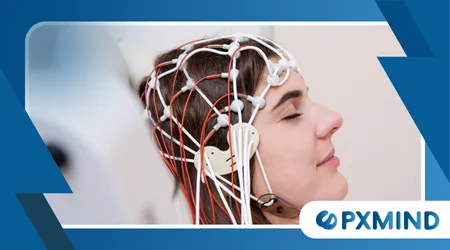
The field of closed loop neurofeedback is transforming modern cognitive enhancement by delivering real-time, algorithmic responses to human brainwave activity.
Anúncios
Traditional biofeedback systems historically relied on delayed patient interpretation to encourage neurological adjustments.
Advanced computational architectures now bypass passive human translation completely by modifying external stimuli instantly.
This sophisticated form of automated brain training relies on continuous electroencephalography data ingestion to optimize mental performance dynamically.
Recent clinical developments validate its potential to reshape neural pathways, combat focus deficits, and elevate psychological well-being.
Table of Contents
- Decoding the Closed-Loop Paradigm
- The Shift From Latency to Real-Time Calibration
- Neuroplasticity and Cognitive Dividends
- The Technical Blueprint: Metrics and Machine Learning
- Addressing Common Practical Questions
- The New Horizon of Neural Optimization
Decoding the Closed-Loop Paradigm
To understand why this shift matters, one must look at how the brain actually learns.
For decades, traditional neurofeedback treated the brain like a student waiting for a graded exam—the feedback arrived, but the moment had already passed.
This specialized cognitive intervention changes the rules by utilizing high-resolution sensors to measure electrical voltage fluctuations within the cerebral cortex.
Sophisticated software analyzes these signals using artificial intelligence to isolate specific frequency bands like alpha, beta, or theta waves.
The system instantly alters an external environment, such as a video game or auditory tone, based on those live neural patterns.
This immediate reinforcement creates a seamless loop where the brain adapts its operational state without conscious cognitive effort.
It is not about consciously trying to concentrate; instead, it is about the environment mirroring the brain so fast that the subconscious stabilizes itself.
The Shift From Latency to Real-Time Calibration
Legacy modalities introduce noticeable latencies because manual calibration requires practitioner oversight between therapeutic intervals.
This lag creates a disconnect, as the brain has already moved on to a different micro-state by the time the reward is delivered.
Automated computing eliminates these procedural delays by recalibrating thresholds multiple times per minute to match shifting baseline patterns.
There is an elegant efficiency here: dynamic algorithmic tuning keeps participants engaged within an optimal zone of neurological learning.
Rapid feedback loops enhance neuroplasticity by accelerating operant conditioning mechanisms within targeted cortical structures.
++ How Neural Synchronization Affects Human Brain Performance
By removing human error and observation delays from the equation, the training becomes an organic extension of the nervous system.
Neuroplasticity and Cognitive Dividends
Peer-reviewed literature demonstrates major improvements in sustained attention metrics and executive functioning tasks.
Clinical trials highlight accelerated emotional processing and reduced anxiety indicators after structured treatment regimens.
It is easy to get lost in the marketing hype of “brain hacking,” but the actual data points to a more grounded reality of systematic structural reinforcement.
Targeted alpha-wave training also supports stress reduction by reinforcing deep states of calm and mental clarity.
Individuals experiencing persistent focus issues exhibit stabilized neural resource allocation following customized closed-loop protocols.
Read more: Why Astrocytes and Glial Cells Are the Brain’s Hidden Power
What we are witnessing is a transition from passive coping mechanisms to active, data-driven neurological fortitude.
The Technical Blueprint: Metrics and Machine Learning
Modern medical configurations utilize robust machine-learning classification frameworks like Random Forest algorithms to categorize attention levels with precision.
++ How Attention Residue Effects Reduce Daily Productivity
These systems ensure that visual or auditory rewards correlate strictly with authentic physiological shifts, filtering out ocular artifacts or muscle movements that frequently skew older data models.
| Operational Parameter | Legacy Neurofeedback Systems | Modern Closed-Loop Protocols |
| System Processing Latency | 200 to 500 milliseconds | Under 10 milliseconds |
| Algorithmic Threshold Updates | Intermittent / Manual | Automated every 30 seconds |
| Average Attention Classification Accuracy | 55% – 63% | 79.3% – 81.2% |
| Targeted Neural Mechanisms | Tonic Power Shifts | Event-Related Desynchronization |
Recent peer-reviewed publications highlight how modern methodologies isolate precise cortical mechanisms to trigger lasting neural plasticity.
Researchers confirm that immediate, contingent reinforcement promotes structural consolidation within complex brain networks.
Advanced diagnostic investigations published via the National Institutes of Health confirm that automated sensory rewards drive rapid behavioral learning.
These optimized networks continue to operate efficiently well after formal clinical sessions conclude, suggesting that the brain retains these calibrated states as its new default setting.
The Mechanics of Cortical Synchrony: Closed Loop Neurofeedback
Achieving peak cognitive performance requires precise communication across distinct brain regions.
Closed-loop systems facilitate this synchronization by mapping phase-locking values, which measure how well different areas of the cortex share information.
When the software detects suboptimal coherence, it subtly recalibrates the sensory feedback to guide the brain toward integrated neural harmony.
This targeted synchronization helps dissolve mental fog, allowing disparate cognitive networks to collaborate smoothly and enhancing complex problem-solving abilities.
Addressing Common Practical Questions
Why is the closed-loop design superior to manual training methods?
Automated systems adjust difficulty metrics dynamically without disrupting the user’s focus during therapy.
Immediate rewards strengthen synaptic connections faster than delayed feedback can achieve, making the session significantly more efficient.
How many sessions are typically required to observe lasting cognitive changes?
Clinical investigations indicate that noticeable physiological adaptation emerges after six to ten standardized interventions.
However, true long-term behavioral consolidation typically requires twenty sustained training intervals to ensure the pathways remain robust.
Can this technology treat severe neurological disorders safely?
This non-invasive approach serves as an effective intervention for attention deficits and emotional dysregulation.
That said, patients must consult licensed clinicians to ensure proper protocol personalization, as generic settings rarely yield clinical-grade results.
The New Horizon of Neural Optimization
The evolution of closed loop neurofeedback represents a major technological leap forward for personalized cognitive enhancement protocols.
Merging real-time electroencephalography monitoring with responsive software allows this methodology to optimize neural pathways with unprecedented speed.
We are moving away from a one-size-fits-all approach to mental wellness and entering an era of hyper-customized neurological design.
As machine-learning algorithms advance, home-based and clinical brain training options will become increasingly accessible, blurring the line between clinical therapy and daily wellness routines.
Explore peer-reviewed data on the Nature Research Index to discover how these systems can elevate your personal cognitive development strategy today.
++ Author Correction: Closed-loop brain training: the science of neurofeedback