
Cognitive Enhancement Tools Are Trending in Neuroscience
Cognitive Enhancement Tools Are Trending in Neuroscience as we navigate a mid-2026 landscape where the boundary between “natural” and “augmented” cognition is becoming increasingly porous.
Anúncios
We aren’t just talking about digital calendars anymore; we are witnessing a pivot toward hardware that talks back to our neurons.
Summary of Contents
- The shift from clinical therapy to mainstream neuro-augmentation.
- Deep dive into Neural Sleeves and high-bandwidth BCI.
- Beyond electricity: The rise of Pulsed Ultrasound (LIPUS).
- AI-Neurofeedback and the death of “trial and error” training.
- The “Neuro-divide”: Access, equity, and mental privacy.
- A look toward 2027: Bio-digital hybridity.
What are the specific tools driving the current neuro-augmentation trend?
In 2026, the term “enhancement” has moved away from vague wellness claims toward high-precision hardware. The most visible tools are Wearable Transcranial Alternating Current Stimulators (tACS).
Unlike the primitive “brain-zapping” kits of a decade ago, these devices use closed-loop AI to match the frequency of your endogenous brain waves, specifically targeting gamma-band oscillations to sharpen focus.
There is also something quite profound happening with “Neural Sleeves.” These are discreet, wearable monitors that track cognitive load through a mix of EEG and fNIRS (Functional Near-Infrared Spectroscopy).
They don’t just record data; they provide subtle haptic feedback to nudge a user back into a state of “flow” before the prefrontal cortex begins to fatigue. This is precision neuro-management, moving from the lab into the hands of high-stakes professionals.
Then we have the evolution of Smart Nootropics. The focus has shifted to selective kinase inhibitors.
These aren’t your typical caffeine-heavy stacks; they are engineered compounds designed to facilitate long-term potentiation—the cellular basis of learning.
It’s a more surgical approach to brain chemistry, though it raises questions about the sustainability of such constant metabolic demand.
How is BCI technology moving beyond medical use?
The integration of Brain-Computer Interfaces (BCI) into daily life is arguably the most disruptive shift we’ve seen this year.
While the media often fixates on invasive chips, the real trend lies in semi-invasive devices like the Motif Neurotech DOT. By sitting just above the brain tissue rather than inside it, these devices reduce surgical risk while maintaining a high-fidelity signal.
We are seeing these interfaces used for more than just moving a cursor with one’s mind. They are being utilized for “emotional regulation” and “executive boost” modes.
Imagine a system that detects the onset of a stress response before you even feel the physical symptoms, automatically initiating a calming neuro-modulation sequence.
This level of integration suggests a future where our digital tools are no longer external peripherals but extensions of our nervous system.
It is a transition that feels both inevitable and slightly unsettling, as it forces us to redefine where the “self” ends and the software begins.
Global Cognitive Neuroscience Market Metrics (2025-2026)
| Metric | 2025 Value | 2026 Projection | Growth Rate (CAGR) |
| Market Size (Global) | $50.16 Billion | $53.01 Billion | 5.7% |
| North America Share | 41.8% | 42.5% | N/A |
| BCI Clinical Trials | 14 Major | 22 Major | 57.1% |
| AI Integration | 65% of Tools | 82% of Tools | 26.1% |
Why is AI-driven Neurofeedback replacing traditional training?
The old model of neurofeedback was often a slog—hours of staring at a screen hoping for a beep. That changed when machine learning began decoding complex neural patterns in real-time.
Modern systems can now identify the exact “neural fingerprint” of your most productive state and guide you back to it with surgical precision.
This eliminates the guesswork that once plagued cognitive training. By focusing on the individual’s unique connectome—the map of neural connections—AI tools ensure that sessions are hyper-personalized.
This is why we see these systems becoming standard in elite environments, from NASA training simulators to the practice facilities of professional esports teams.
++ Why Predictive Processing Brain Theory Is Gaining Attention
There is, however, an often-ignored nuance: the risk of over-optimization. If we are always using AI to stay in a “peak” state, we might be sacrificing the messy, wandering mental states that actually foster deep creativity.
It is a trade-off that many are willing to make in the name of efficiency.
Which methods offer the best balance of safety and power?
Scientific consensus currently highlights Low-Intensity Pulsed Ultrasound (LIPUS) as a frontrunner for non-invasive enhancement.
While electrical stimulation (tDCS) is popular, ultrasound offers something electricity cannot: depth. LIPUS can reach subcortical structures like the hippocampus without the need for an implant.
This capability is a game-changer for memory consolidation. By using sound waves to gently modulate deep-brain structures, users can potentially enhance their ability to store new information.
It is a cleaner, more targeted approach that avoids the “spread” of current associated with scalp electrodes.
Read more: How Brain Age Gap Models Reveal Hidden Brain Health
We are also seeing a resurgence in “Photobiomodulation”—using near-infrared light to stimulate mitochondrial function in brain cells.
It’s less “active” than BCI or ultrasound, but as a foundational tool for brain health and recovery, its non-invasive nature makes it an easy entry point for the neuro-curious.
When does cognitive liberty become a legal necessity?
As these tools gain traction, the “neuro-divide” is becoming a legitimate social concern.
There is a real risk that cognitive enhancement will follow the same path as high-speed internet or quality healthcare: available to the few, while leaving the rest at a biological disadvantage.
We must also confront the fragility of mental privacy. If a device can boost your concentration, it is also recording the data that defines your internal state.
Protecting this “neural data” from being commodified by tech giants is the next great civil rights frontier.
Without strict “cognitive liberty” laws, the tools meant to empower us could easily become tools for surveillance.
Responsible usage in 2026 isn’t just about safety; it’s about autonomy. The most sophisticated users are practicing “neuro-cycling”—intentionally taking breaks from all stimulation to ensure their brain retains its natural homeostatic balance.
++ The Rise of Skill Stacking Strategy for Faster Learning
Enhancement should be a choice, not a requirement for survival in the modern workforce.
What should we expect as we move toward 2027?
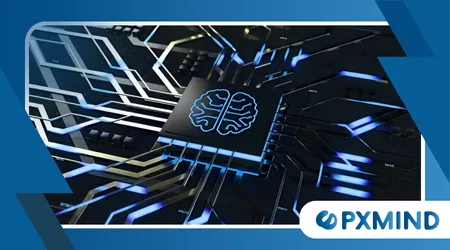
The next phase of this evolution involves “Neuromorphic Computing”—chips that mimic the architecture of the human brain.
This will allow enhancement tools to process information with almost zero latency and significantly less power. We are moving toward a reality where the interface becomes truly invisible.
Furthermore, the rise of “Neuro-Symbolic AI” suggests that future tools won’t just help us think faster; they will help us think better.
By combining raw processing power with logical reasoning frameworks, these systems will act as a “second brain” that assists in complex decision-making and creative synthesis.
Ultimately, the goal is a symbiotic relationship. We are not replacing human intuition but rather giving it a more powerful engine.
As we refine these tools, our understanding of what it means to be “humanly capable” is undergoing a permanent and fascinating expansion.
A Final Perspective: Cognitive Enhancement Tools Are Trending in Neuroscience
The evidence is clear: Cognitive Enhancement Tools Are Trending in Neuroscience because they offer a tangible path to self-evolution.
Whether through ultrasound pulses or AI-driven BCIs, we are finally gaining the keys to our own biology.
If we navigate the ethical minefields with as much vigor as we pursue the technological breakthroughs, the potential for human growth is virtually limitless.
As research in Frontiers in Human Neuroscience continues to show, the integration of silicon and synapse is no longer a question of “if,” but “how fast.”
Frequently Asked Questions
1. Is there a “rebound effect” after using these tools?
Some users report “neural fatigue” after intense sessions of tACS or BCI-assisted work. This is why “neuro-cycling” is recommended—giving the brain time to reset its natural neurotransmitter levels without external help.
2. How do “Neural Sleeves” differ from a standard EEG?
Standard EEG just records electrical activity. Neural Sleeves combine EEG with fNIRS to measure oxygenation levels in the brain, providing a much more accurate picture of actual cognitive effort and fatigue.
3. Can these tools be used to “delete” bad habits?
While not a “delete” button, neurofeedback is being used to strengthen the inhibitory pathways in the prefrontal cortex, making it easier for individuals to resist impulsive behaviors or cravings.
4. Are these enhancements permanent?
Some effects are transient (lasting hours), while others, through the principle of neuroplasticity, can lead to long-term structural changes in the brain if the training is consistent over several months.
For a practical look at the hardware currently in use, this overview of Non-Invasive Brain Stimulation explores how modern clinics are implementing these technologies for both performance and recovery.
++ The Future of Cognitive Enhancement: Digital Platforms Transforming Mental Training
++ Cognitive Enhancement through AI: Rewiring the Brain for Peak Performance
